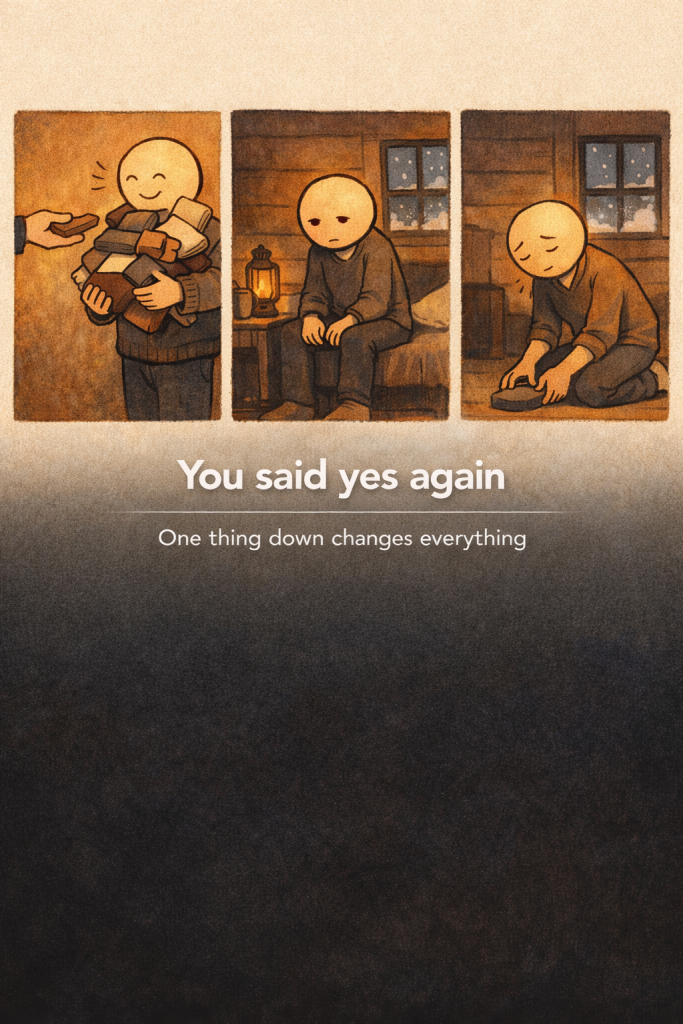
Some people do not fall apart when they feel low. They keep showing up. They keep producing. They answer texts. They smile in meetings.
But inside, things feel flat. Joy feels far away. Rest does not land the way it used to.
If this is you, you are not broken. Your system may be running on willpower and habit, not on real fuel.
What this looks like in real life
With high functioning depression, you might do everything you are supposed to do, then feel nothing when it is done. You can look steady and still feel worn down.
You may wake up on time, get the kids out the door, and handle work. Then you sit on the couch and feel like you are watching your own life from a distance.
A common sign is losing interest in the things you used to enjoy. People might call you disciplined, but you feel like you are just pushing through.
Some people start searching online for emotional numbness help and feel ashamed for needing it. Needing support is not a character flaw.
You might notice silent sadness symptoms like irritability, less patience, or crying when you are alone. You may also feel more sensitive to small setbacks.
Another pattern is chronic low motivation. You still meet deadlines, but everything takes more effort than it should.
You might also describe feeling empty inside, even when life is busy. It can feel confusing, because nothing is clearly wrong on the outside.
Why it sticks and what helps
When you keep functioning, your brain can learn that numb is safer than feeling. If you have been stressed for a long time, your system may stay in a low gear to conserve energy.
This can look like constant mild exhaustion. Sleep might be light. Your body feels tense, even when you are sitting still.
Sometimes this lines up with persistent depressive disorder, which can be lower level but longer lasting. It can blend into your personality, so you start to think this is just who you are.
Using national data as Minnesota specific research unavailable.
It also helps to know that even milder depression can still matter. If your symptoms are below a clear cutoff, they can still affect relationships, focus, and health.
What helps is usually not one big breakthrough. It is steady shifts that rebuild emotion, meaning, and energy. Therapy can help you name the pattern, challenge harsh self talk, and make a simple plan you can follow.
Minnesota factors to consider
In Minneapolis, life can move fast even when you do not feel like you have energy. That gap can make you feel like you are failing, when you are really depleted.
St Paul can feel quieter in pace, but responsibilities still stack up. When you carry a lot alone, numbness can start to feel normal.
In the Twin Cities, winter can tighten routines. Less daylight and less movement can make it easier to go on autopilot.
Mental Health Minnesota can be a helpful place for community education and support options. Knowing what is available can reduce the sense that you are on your own.
NAMI Minnesota is another option for classes and family support. Even reading their materials can help you put words to what you are feeling.
The University of Minnesota has shared research and education that many people find grounding. Sometimes it helps to learn the basics of mood and behavior in plain language.
One everyday moment that comes up a lot is driving on I 394 after dark. You are moving, but you feel detached, like your mind is somewhere else.
A composite example of change
This is a composite example and details are changed for privacy.
Jordan is reliable at work and never misses a deadline. Friends describe Jordan as calm and capable, even in stressful weeks.
At home, Jordan notices high functioning depression signs like going quiet, scrolling more, and laughing less. Jordan starts to wonder if something is wrong, since life looks fine.
Jordan looks up emotional numbness help and realizes this is common. That small moment of naming it lowers shame and opens the door to change.
Over time, Jordan notices silent sadness symptoms show up most on Sunday nights and after long meetings. Instead of judging it, Jordan tracks it for two weeks.
Jordan also sees chronic low motivation is tied to skipping lunch and staying indoors all day. Jordan adds one short walk and one real meal each workday.
As the routine improves, Jordan still has hard days, but stops feeling empty inside all the time. The goal is not perfect happiness, it is getting back real range and connection.
Practical steps you can start this week
You do not need a huge plan. You need a small plan you can repeat. Pick one or two steps, then practice them for seven days.
- Name the pattern out loud
- Do one ten minute walk
- Eat a real lunch
- Set one small boundary
- Reduce late night scrolling
- Choose one enjoyable thing
- Talk to one trusted person
If you want a few more practical ideas, you can read more therapy insights and pick one that fits your week.
FAQ
How do I know if this is stress or something deeper?
Stress comes and goes with the situation. If the flat feeling stays for weeks, it may be more than stress. A counselor can help you sort it out.
What if I am still performing well at work?
Performance does not cancel out pain. Many people keep functioning while feeling low. Support can help you feel more like yourself again.
Can this show up as irritability instead of sadness?
Yes. Some people feel more tense, impatient, or numb instead of tearful. Mood struggles can look different across people.
What if I do not have a clear reason for feeling this way?
You do not need a single cause to deserve help. Sleep, long stress, grief, and burnout can build up over time. Naming your patterns is often the first step.
What kind of therapy tends to help?
Many people benefit from skills focused approaches and steady behavior changes. The best fit is the one you will actually use. A good therapist will tailor it to you.
If you feel stuck on autopilot, it can help to talk with someone who will not judge you. You do not have to wait until things are severe to get support.
You deserve more than just getting through the day. With small changes and the right support, many people feel warmth and meaning return.
Getting support is a practical step, not a dramatic one. If you want help sorting out what is going on, you can reach out.
Get Support: Meet Mitch: Meet Mitch (612) 562 9880
Schedule: Schedule a consultation
Sources:
Cleveland Clinic Persistent Depressive Disorder (PDD) (2024): https://my.clevelandclinic.org/health/diseases/9292-persistent-depressive-disorder-pdd Mayo Clinic Persistent depressive disorder (2022): https://www.mayoclinic.org/diseases-conditions/persistent-depressive-disorder/symptoms-causes/syc-20350929 Hao et al Subthreshold Depression systematic review (2023): https://pmc.ncbi.nlm.nih.gov/articles/PMC10588757/