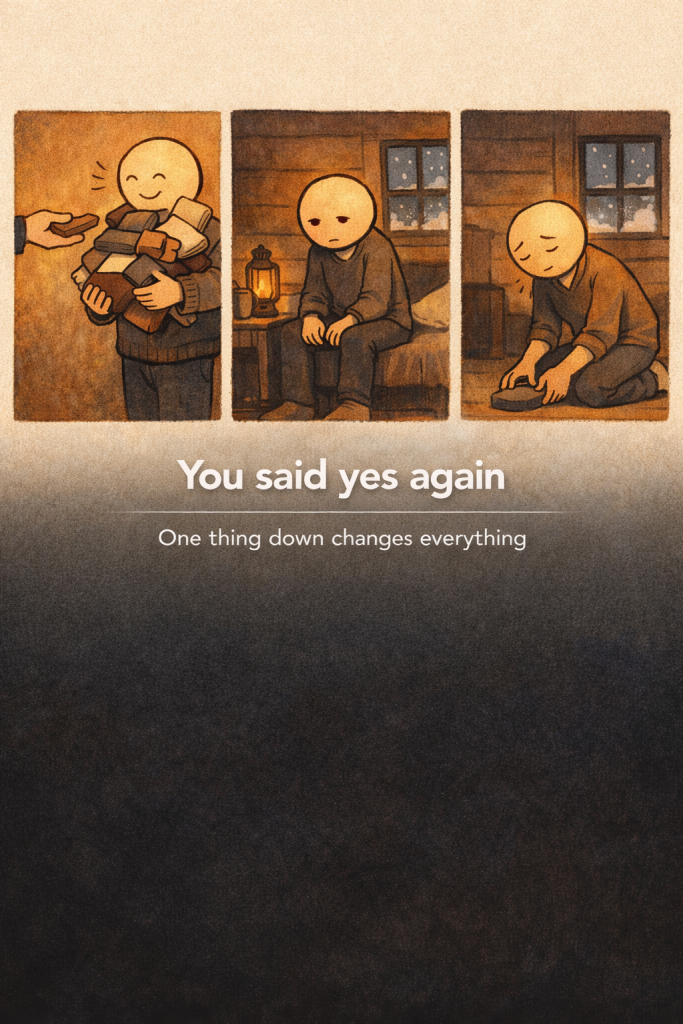
You can be doing all the things. Work. Parenting. Showing up. Answering texts. And still feel flat inside, like your emotions are on mute. A lot of people assume numb means something is wrong with them. More often, it means your mind has been protecting you for a long time.
What this looks like in real life
When your brain is under stress, it tries to make quick meaning. That is where thought traps come in. They feel true in the moment. You may notice a harsh inner narrator, tight shoulders, and a constant urge to fix.
Many people relate to cognitive distortions examples like mind reading, worst case guessing, and discounting the good. It can feel like you are being realistic, but your mind is actually narrowing the view. The more tired you are, the more convincing these thoughts sound.
One common trap is black and white thinking. It turns a normal mistake into a total failure story. That can make you stop trying or overwork to prove you are okay.
Another trap is catastrophizing anxiety. Your brain jumps from a small problem to a life ruining outcome. You start preparing for danger that is not here yet, and your body stays on alert.
A simple CBT tool is a thought record worksheet. It helps you slow down and separate facts from feelings. It also gives you a place to practice how to reframe negative thoughts in a way that still feels honest.
Why it sticks and what helps
Thought traps stick because they once helped you cope. If you grew up in chaos, scanning for risk might have kept you safe. If you were judged a lot, perfection might have felt like protection.
Your nervous system also plays a role. When you are stressed, your body chooses speed over accuracy. That is why the same situation can feel manageable on a good day and impossible on a hard day.
Using national data as Minnesota specific research unavailable.
What helps is not arguing with yourself all day. CBT works best when you practice noticing patterns, then testing them gently. Small experiments build trust with your own mind, and calm follows.
Minnesota factors to consider
In Minnetonka, many people carry a high functioning pace that looks fine from the outside. They push through, stay productive, and tell themselves they will rest later. Over time, that can turn emotions down, not because you do not care, but because you are depleted.
In St Paul, I often hear people describe feeling alone in a crowded schedule. The Twin Cities culture can reward being busy and capable. Add winter to the mix, and it is easy to feel more shut in and less connected.
NAMI Minnesota and Mental Health Minnesota can be good community supports if you want education and connection. Even a steady routine at Target can become a small anchor when life feels scattered. Winter driving can also raise baseline stress, even if you do not realize it, because your body braces for the unexpected.
A composite example of change
This is a composite example and details are changed for privacy.
A client noticed they were snapping at family, then feeling guilty and numb. They kept telling themselves they should be grateful, so they shoved feelings down. At night, their mind replayed conversations and searched for what they did wrong.
We started by naming the pattern without shame. They practiced spotting cognitive distortions examples in real time, then writing down a more balanced thought. This took less than five minutes a day, but it added space.
They also caught a loop of black and white thinking. If they did not do a task perfectly, they told themselves it did not count. We worked on a middle option that still respected effort and limits.
Next, they noticed catastrophizing anxiety before meetings. Their body felt danger, even when the meeting was routine. They practiced a short breathing reset, then tested a small action instead of avoiding.
We used a thought record worksheet to track what triggered the spiral. They learned to identify the feeling under the thought, like fear of being judged. From there, it became easier to reframe negative thoughts without forcing fake positivity.
Practical steps you can start this week
Start small. You do not need to fix your whole mind. You just need a few steady moves that reduce the spiral and build clarity.
- Name the thought trap out loud and add the words this is a thought.
- Look for the missing middle and ask what is a third option here.
- Check the body first, then choose one calming action before you respond.
- Ask what evidence supports this, and what evidence does not.
- Write one sentence that is kinder and still true, then read it twice.
- Do one tiny task to create traction, even if motivation is low.
- End the day with one win you can point to, even if it is small.
If you want more support building these skills, you can also explore practical therapy insights for more ideas you can try.
FAQ
Are thought traps the same as negative thinking
Not always. Thought traps are patterns that bend reality in a predictable way. They usually show up more when you are tired or stressed.
How fast can CBT help
Some people feel relief in a few weeks. Most progress comes from small daily practice, not one perfect insight.
What if I cannot catch the thought in the moment
That is normal. Start by noticing it after the fact, then work backward. With time, you will catch it sooner.
Is numbness always depression
No. Numbness can be stress, burnout, grief, or protection. A therapist can help you sort out what is happening.
Do I need worksheets to do CBT
No. Worksheets can help, but you can practice with brief notes on your phone or a simple journal.
If you keep functioning but feel disconnected, you are not broken. Your brain may be trying to protect you, and it may be using old strategies. With practice, you can build a calmer inner voice and feel more like yourself again.
Getting support can be a relief, especially if you have been carrying this alone. A good therapy plan should feel practical and doable, not overwhelming.
Get Support: Meet Mitch: Meet Mitch (612) 562 9880 Schedule: Schedule a consultation
Sources:
Cleveland Clinic (2025): https://health.clevelandclinic.org/cognitive-distortions Annals of Neurosciences via PMC (2024): https://pmc.ncbi.nlm.nih.gov/articles/PMC11559496/ Psych Central (2021): https://psychcentral.com/depression/cognitive-distortions-the-lies-depression-tells