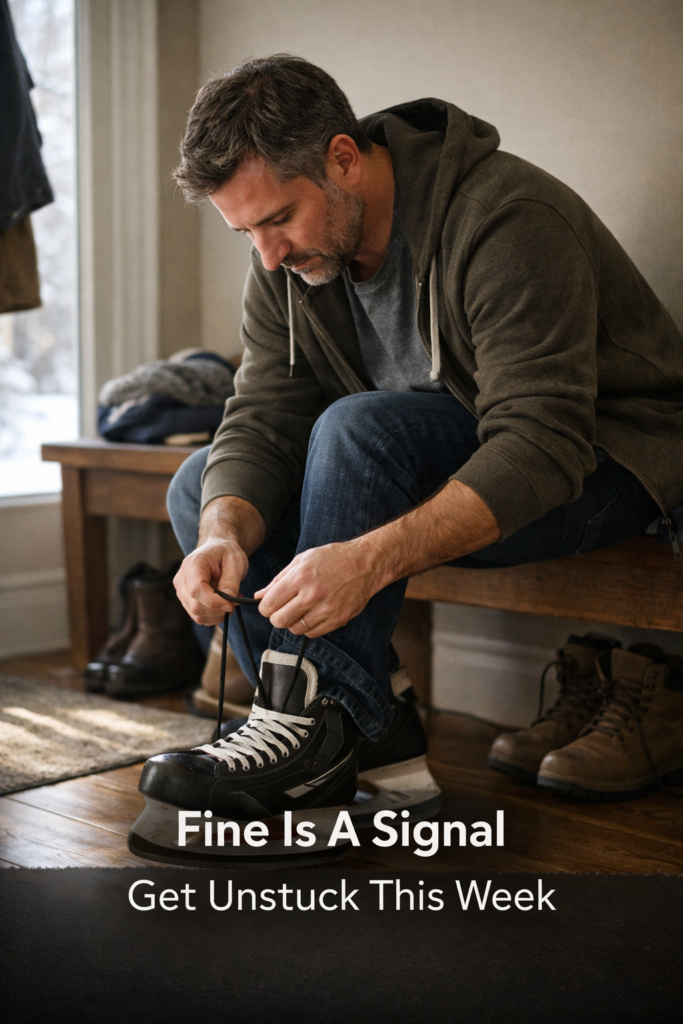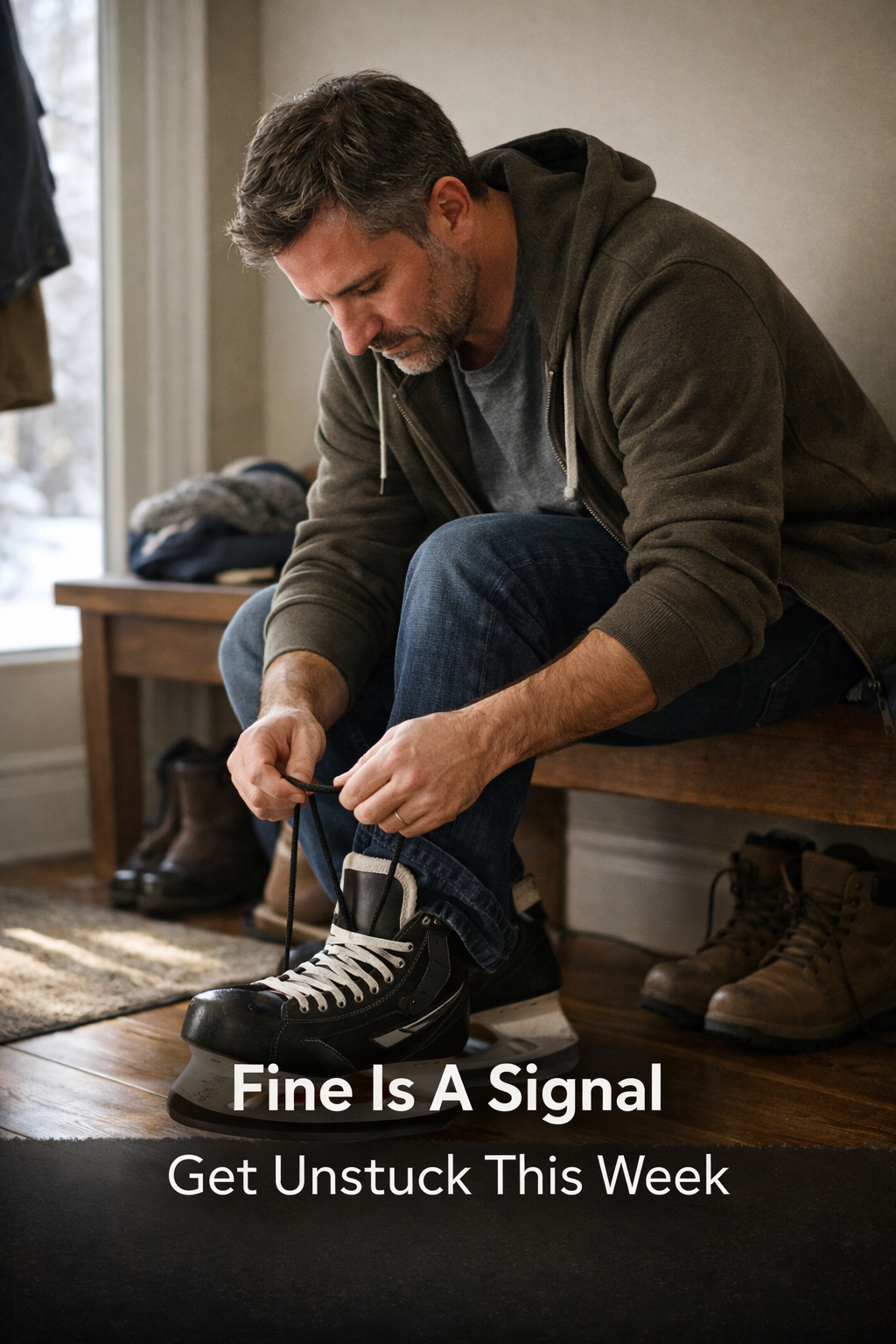
A lot of men in Minnesota live in a steady loop of work, family, and handling problems. You show up. You pay bills. You keep things moving. Then one day you notice you are snapping faster, sleeping lighter, and feeling less like yourself. Friends ask how you are doing and you say, “Fine.” You might even mean it.
But “fine” can hide something real. Not a crisis, not a dramatic breakdown, just a slow grind where your mood gets shorter and your patience gets thinner. If you have felt stuck, this guide is for you. It is practical, direct, and built for real life in places like Minneapolis, St. Paul, Minnetonka, and everywhere in between.
When “fine” becomes a warning sign
It is common for distress to show up in ways that do not look like sadness. For many men it looks like less energy, more tension, and fewer words. The body carries it, the mind pushes through it, and relationships feel the impact.
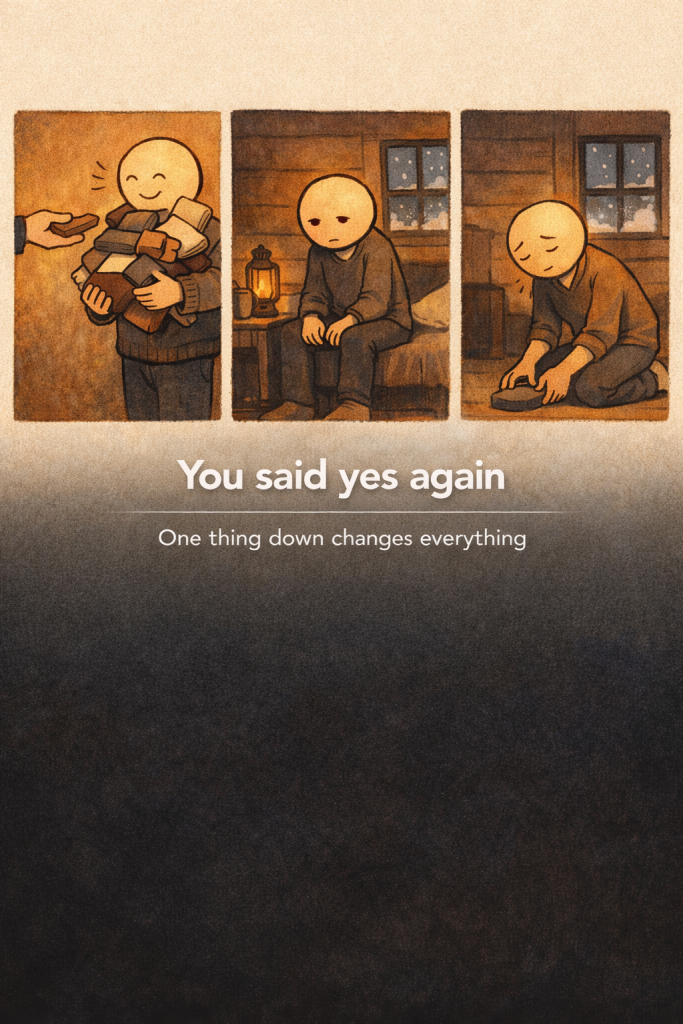
One sign is pulling back. You stop reaching out, you cancel plans, or you disappear into work, scrolling, or the garage. Another sign is feeling numb. You can be grateful for your life and still feel nothing when you should feel something. That is not weakness. It is often your nervous system trying to conserve.
Watch for anger and irritability that feels out of proportion to the moment. The dishwasher, traffic on 494, a comment from a coworker at Target, or a small parenting issue can flip a switch. You may also notice emotional shutdown when you are under pressure, especially in conflict. You go quiet. You avoid. You tell yourself it will pass.
Men often delay help because they assume therapy is only for people who cannot cope. The truth is the opposite. Getting support early is a high competence move. It helps you understand what is driving the stress, what is draining you, and what you can change before things get worse.
If you are considering mens therapy Minnesota, you do not need to wait until everything falls apart. You just need a clear next step.
Why this shows up in Minnesota life
Minnesota has a particular culture of being capable. People are polite, steady, and practical. Many men learned to be the reliable one, the one who does not complain. That value can be admirable, and it can also become a trap.
Winter is a real factor. Short days, long nights, and fewer casual social moments can quietly tighten the pressure. A man in Duluth who works outdoors might feel it physically. A man in Rochester working long shifts might feel it as exhaustion. A man in Mankato juggling family schedules might feel it as constant tension.
There is also a social piece. Many men have fewer close friendships than they did in their twenties. The invites drop off. The conversations stay surface level. You might have people around you and still feel alone.
Local resources help, and sometimes they are not enough by themselves. Organizations like NAMI Minnesota and Mental Health Minnesota do important work in awareness and support. Still, many men want something private, structured, and action focused.
Using national data as Minnesota specific research unavailable.
If you are looking for therapy for men Minnesota, it can help to choose a format that fits your life. Some men prefer in person support because it feels grounding. Some prefer telehealth because it saves drive time and fits around parenting and work. Both can be effective when you show up consistently.
What research says about men and getting unstuck
Research on mens mental health often comes back to one key point: norms matter. When men learn that self reliance is the only acceptable option, they wait longer to seek help. They also may describe their stress differently, focusing on pressure, performance, and frustration rather than emotions.
Another theme is that men do better when support feels practical. Skills based approaches can help you notice patterns, regulate your nervous system, and communicate more effectively. Therapy is not about talking forever. It is about getting clarity and building tools you can actually use on a Tuesday night when you are tired and your brain is loud.
A helpful idea is “feeling rules.” Many men were taught rules about which emotions are allowed and which are not. When you follow those rules for years, your system often finds a side door. Stress shows up as sleep issues, constant worry, numbness, or conflict at home. Rewriting those rules is not about becoming someone else. It is about becoming more flexible and more steady.
A composite example from Minnesota
This is a composite example and details are changed for privacy.
A Minnesota resident in St. Paul had a life that looked stable from the outside. Good job, decent routine, involved with family. Inside, he felt stuck. He described it as running on fumes and being “on edge” all the time. His partner said he was distant. He said he was just tired.
The pattern was predictable. Work stress rose, he stopped exercising, sleep got lighter, and his patience got shorter. Small problems felt huge. He would go quiet during conflict, then later feel guilty for not handling things better. He did not want to burden anyone, so he carried it alone.
Over time he noticed emotional shutdown in moments when connection mattered. He was physically present but mentally elsewhere. That scared him more than the stress itself.
The turning point was not a dramatic event. It was realizing he was tired of feeling numb and reactive. He started treating his mental health the same way he treated his physical health: notice the early signs, use a plan, and ask for help before the damage spreads.
Practical steps you can start this week
You do not need a perfect routine. You need a few repeatable moves that lower pressure and build steadiness. If you want a clearer process, learn more in How it works.
-
Do a quick daily check in: sleep, energy, mood, stress, connection. Rate each from one to ten.
-
Identify your top two stress triggers right now. Be specific, not vague.
-
Set one boundary that protects recovery time, even if it is just thirty minutes after work.
-
Move your body in a simple way three days this week. Walking counts. Lifting counts. Consistency matters more than intensity.
-
Reduce one numbing behavior for seven days. This might be extra alcohol, endless scrolling, or late night work.
-
Practice one grounding tool when you feel keyed up: slow breathing, a short body scan, or a brisk walk outside.
-
Write down the thought you keep repeating when you feel stuck. Then write a more accurate version you can live with.
-
Have one honest conversation with someone safe. Keep it simple: “I have been carrying a lot lately and I am not feeling like myself.”
-
Build one small plan for stress management for men that fits your schedule, not a fantasy schedule.
-
If you keep cycling, consider support. Mens therapy Minnesota can be a place to build skills without judgment and without pressure to perform.
FAQ
How do I know if I am stressed or actually depressed?
Stress and depression can overlap. If low mood, numbness, sleep changes, or loss of interest lasts most days for two weeks or more, consider talking with a professional. Consult your provider if you are unsure.
What if I do not want to talk about feelings for an hour?
You can ask for a practical approach. Many men prefer sessions that focus on patterns, decision making, and skills. Therapy for men Minnesota can be structured and action oriented.
Is anger a normal stress response?
Yes, anger can be a stress signal. The goal is to understand what is underneath it and build better regulation. If anger and irritability is hurting your relationships, it is a good reason to get support.
Does telehealth work as well as in person therapy?
For many people it does. Telehealth can be especially helpful when schedules are tight or driving is hard. The best option is the one you will actually use consistently.
What if I feel embarrassed about needing help?
Most men do at first. Try reframing it as training. You are learning how to manage pressure, communicate, and stay steady under load.
How long does it take to feel better?
It depends on what is driving the stress and how consistent you are with changes. Some people notice improvement in a few weeks. Others need more time. Progress is often gradual and real.
What can I do today if I feel overwhelmed?
Start with basics: eat, hydrate, and sleep. Take a short walk. Limit alcohol. Use a grounding tool. If overwhelm is frequent, stress management for men works best with a plan and support.
You do not have to become a different person to feel better. You can stay the steady, capable guy and still take care of what is happening inside. Real strength is noticing the early signs and responding with intention. If you have been pushing through for months, there is a better way. Support can help you feel clearer, more connected, and more like yourself again.
If you are ready, take a small step this week. Choose one change that reduces pressure and one action that increases connection. That is how momentum starts.
Get Support:
Meet Mitch: Meet Mitch (612) 562-9880
Schedule: Schedule a consultation
Sources:
-
Rewrite “feeling rules” to launch a new era for mens mental health (Vanderbilt University News, 2024 to 2026): https://news.vanderbilt.edu/2025/06/09/rewrite-feeling-rules-to-launch-a-new-era-for-mens-mental-health/
-
Emotional exhaustion: When your feelings feel overwhelming (Mayo Clinic Health System, 2024 to 2026): https://www.mayoclinichealthsystem.org/hometown-health/speaking-of-health/emotional-exhaustion-during-times-of-unrest
-
Mens Mental Health Matters: The Impact of Traditional Masculinity Norms on Mens Willingness to Seek Mental Health Support (PubMed Central, 2024 to 2026): https://pmc.ncbi.nlm.nih.gov/articles/PMC12117241/