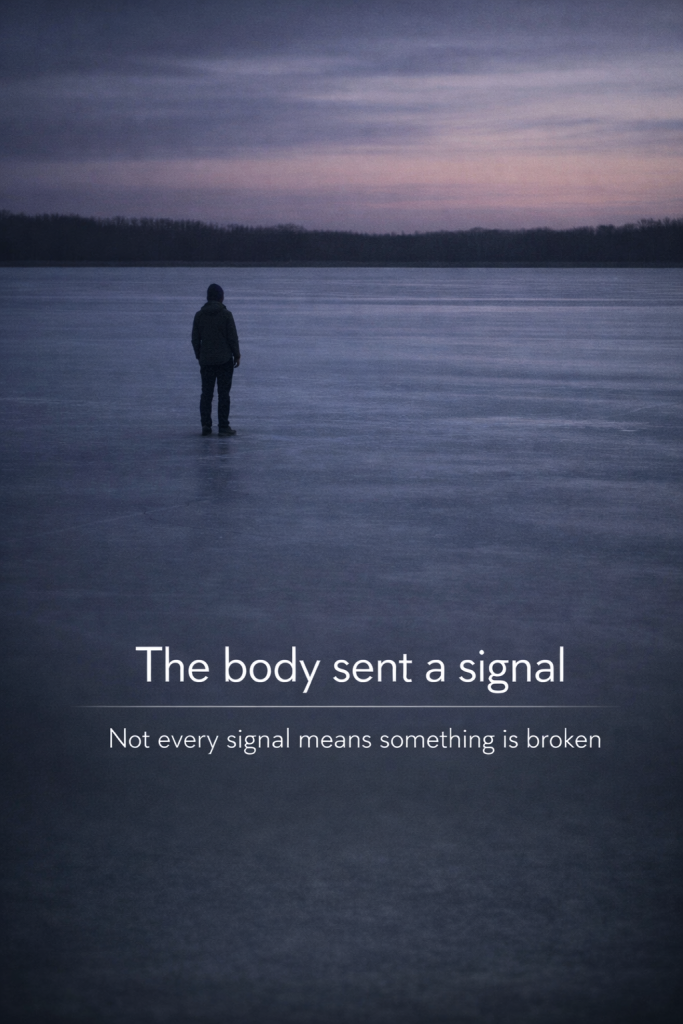
You feel your shoulders tighten before a hard conversation. Your chest gets heavy after a long commute. Your mind races at night even when nothing specific is wrong. These are real physical sensations. They are also completely normal responses to stress. But somewhere in the wave of wellness content online, every one of these feelings picked up a new name. Your nervous system is dysregulated. Your body is stuck in survival mode. You are not safe. The language sounds clinical and authoritative. It also may not be accurate. Nervous system science is real and genuinely useful. The way it gets applied online often is not.
What this looks like in real life
The nervous system has real stress responses built into it. The fight flight freeze response is a genuine biological system. When your brain detects a threat, your sympathetic nervous system activates fast. Heart rate rises. Breathing shortens. Muscles tighten. That reaction evolved to protect you in genuine emergencies and it works exactly as designed.
Actual nervous system dysregulation symptoms involve that system staying switched on when it should not be, or shutting down in ways that interfere with everyday life. People who have lived through significant trauma or prolonged overwhelming stress may have a nervous system that stays on alert even in safe situations. That is a real and specific clinical picture. It deserves real and specific clinical attention.
The online version of this concept has traveled well past that boundary. People now describe their nervous system as dysregulated when they feel frustrated, rushed, socially drained, or simply tired. Those feelings are real. They are not the same as a nervous system shaped by trauma or chronic overwhelm.
Anxiety body sensations like a tight chest, shallow breathing, and racing thoughts are common. They are often a normal stress response rather than a sign of clinical dysregulation. That distinction changes what kind of help is actually useful.
Chronic stress physical effects are also real and worth addressing. Long periods of unbroken stress do affect the body over time. Sleep suffers. Energy flattens. Concentration becomes unreliable. Those effects deserve attention. They are not automatically a sign that your nervous system has been fundamentally altered.
Why it sticks and what helps
The somatic awareness movement has done genuine good. Teaching people to notice what their body is doing during stress is useful. The concepts at its core come from real research on how stress affects the nervous system and how the body responds to prolonged pressure.
The problem begins when these ideas travel through short online content without the context that makes them accurate. A concept that takes clinical training to apply correctly gets flattened into a phrase anyone can repeat. People recognize something in it, adopt the framework, and skip the nuance that would make it helpful rather than just familiar.
Using national data as Minnesota specific research unavailable.
Research on the autonomic nervous system shows that most people experience stress activation and recovery as a normal daily cycle. Your heart rate rises when you are running late. It drops when you sit down and the pressure eases. That is a healthy, functional nervous system doing exactly what it should. It is not dysregulation.
What helps is learning to tell the difference between ordinary stress activation and something that has become stuck. Ordinary stress tends to respond to basic recovery. Good sleep, consistent movement, and time with people you trust lower the baseline over time. When those strategies make no meaningful difference after genuine effort, that is worth taking seriously. A therapist can help you figure out which situation you are actually dealing with.
Minnesota factors to consider
In Minneapolis, somatic language and nervous system concepts have moved into fitness communities, workplaces, and everyday conversation. That openness to body-based awareness reflects real cultural progress. It can also make it harder to sort clinical concepts from wellness trends when both use the same words.
In Rochester, Mayo Clinic has built one of the country’s most recognized research institutions. Their work on stress physiology and chronic illness gives people in the region access to strong health information. That is worth using when the internet is full of oversimplified explanations.
Across the Twin Cities, NAMI Minnesota offers grounded mental health education that goes deeper than trending language. Their resources help people put accurate words to what they are experiencing before drawing large conclusions about what is wrong.
Winter adds its own layer here. Winter driving alone raises physical tension before the day has properly started. Short days and cold months reduce movement and limit casual social contact. That combination raises the body’s baseline stress level in ways that can make ordinary stress feel more intense than it actually is. Naming that context accurately is often the first useful step.
A composite example of change
This is a composite example and details are changed for privacy.
A client came in certain his nervous system was dysregulated. He had done extensive reading online and believed his body was stuck in a chronic fight flight freeze response. He was tired, short-tempered, and could not wind down at night no matter what he tried.
As we worked together, a more accurate picture came into focus. He was not dealing with trauma. He was dealing with eighteen months of heavy work pressure and almost no recovery. Sleep was short and irregular. Meals were skipped most days. Exercise had stopped entirely and social time had dropped to nearly nothing.
His body was responding to real, ongoing pressure with real, ongoing activation. That is not a broken nervous system. That is a functional one working without rest. Chronic stress physical effects were present because the load had genuinely been too high for too long without real relief built in.
Learning to calm an overwhelmed mind in his case meant building actual recovery into his schedule rather than treating himself as clinically impaired. Sleep improved within a few weeks. Irritability dropped. He felt significantly steadier and more like himself without a single clinical intervention.
Practical steps you can start this week
You do not have to know whether your nervous system is dysregulated to take your stress response seriously. You need steady practices that give your body actual recovery rather than just a better label for what is wrong. Start with one or two and repeat them for a full week before adding more.
- Track sleep quality, energy, and mood for two weeks before drawing any conclusions about your nervous system.
- Add one movement practice each day. Even a ten minute walk reliably lowers physiological stress over time.
- Build a wind-down routine at night that removes screens for the last thirty minutes before bed.
- Notice which specific situations reliably spike your stress response and which ones settle quickly on their own.
- Reduce the overall load before reaching for a clinical explanation. Sometimes the system is not broken. It is just overloaded.
- Eat regular meals. Blood sugar swings add physical stress that can feel almost identical to anxiety.
- Spend consistent time with people who lower your baseline rather than raise it. That matters more than most people account for.
- If sleep, mood, and energy do not improve after two to three weeks of basic recovery habits, bring that information to a therapist rather than a social media thread.
If you have been running hard for a long time and wondering whether the cost is finally showing up in your body, it helps to get specific before reaching for a framework. Reading about what emotional exhaustion actually costs can help you see whether your body is sending a signal that needs more than rest. If you are unsure whether what you are experiencing is stress, burnout, or something deeper, exploring the difference between burnout and depression is a useful place to start getting more accurate about what is actually going on.
FAQ
What is nervous system dysregulation
Nervous system dysregulation refers to the autonomic nervous system staying stuck in a stress response when it should return to baseline, or shutting down in ways that interfere with daily function. It is associated with trauma and chronic overwhelming stress. It is not the same as everyday frustration or fatigue.
Is ordinary stress the same as dysregulation
No. Stress is a normal activation your nervous system uses to respond to pressure. It is designed to rise and fall with the situation. Dysregulation involves a system that has lost that flexibility and stays activated or collapsed regardless of what is actually happening around you.
How do I know if my body is genuinely stuck
If basic recovery habits like sleep, movement, and reduced pressure do not move the needle after several consistent weeks, that is worth exploring with a professional. A therapist can help you assess whether something clinical is happening or whether the load is simply too high.
Can basic habits really change how my body handles stress
For most people, yes. The nervous system responds to consistent input over time. Sleep, movement, nutrition, and social connection are not small things. They are the foundation. When those basics are solid, many stress symptoms improve without any clinical intervention.
When should I see a therapist for stress symptoms
If your stress response is affecting sleep, relationships, work, or daily function consistently over several weeks, that is a reasonable time to reach out. You do not need a diagnosis or a framework. You just need an honest look at what is happening and a plan that fits your actual life.
Your body is not broken because it responds to stress. That response is doing exactly what it was designed to do. The question worth asking is whether the load is too high, the recovery is too low, or whether something deeper needs real attention. Most of the time the first two questions deserve a serious answer before the third one becomes relevant.
Getting more specific about what is actually driving your symptoms is almost always more useful than a framework that seems to explain everything. Stress is real. Bodies under pressure are real. Both deserve accurate attention rather than a label that closes the conversation before it gets useful.
If you have been feeling off and are not sure whether it is stress, burnout, or something more, talking with someone who can help you sort it out is a practical next step. You do not have to arrive with the right vocabulary. Showing up honestly is enough.
Get Support: Meet Mitch: Meet Mitch (612) 562 9880 Schedule: Schedule a consultation
Sources:
Healthline (2025): https://www.healthline.com/health/anxiety/what-is-nervous-system-dysregulation Positive Psychology (2025): https://positivepsychology.com/nervous-system-regulation/ Associated Clinic of Psychology (2025): https://acp-mn.com/about-acp/blog/how-to-heal-a-dysregulated-nervous-system/