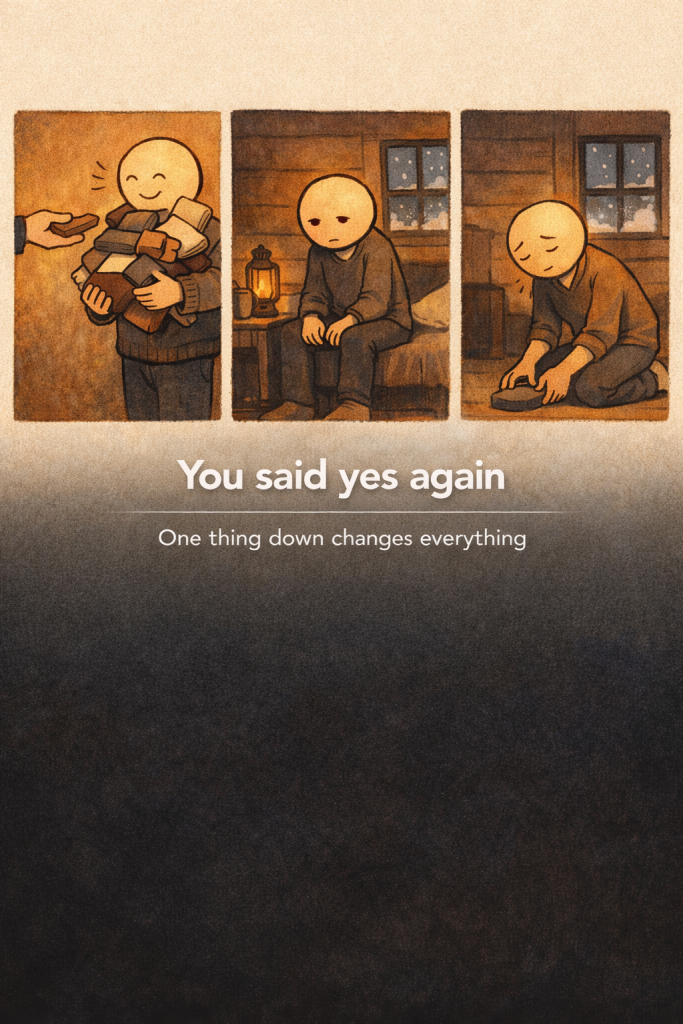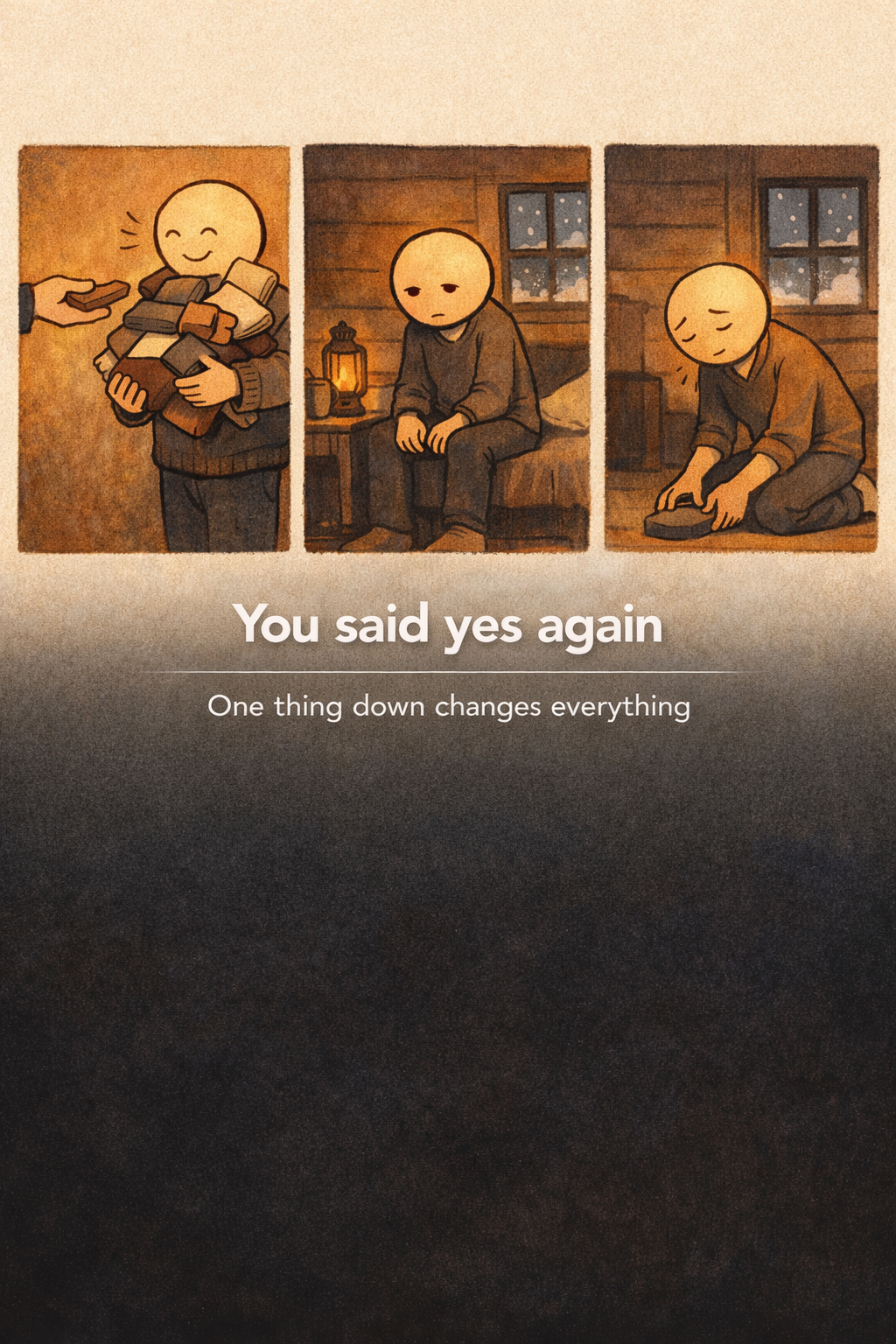
You are the one who handles it. The one who stays calm when others fall apart. You pick up the slack, check on everyone, and keep showing up. From the outside, you look steady. But inside, something has been quietly running dry. If you have ever felt exhausted in a way that sleep does not fix, or anxious even when nothing is visibly wrong, you are not alone. High functioning anxiety symptoms often hide in plain sight behind a packed schedule and a reputation for being reliable.
This is not a character flaw. It is a pattern. And once you name it, you can change it.
What this looks like in real life
High functioning anxiety symptoms do not always look like panic. They often look like productivity. You respond to messages fast. You never miss a deadline. You plan three steps ahead. People around you may not see anything wrong because you are so good at managing the surface.
But underneath, the nervous system is working overtime. You might lie awake replaying conversations. You might feel a tight chest before meetings or a low hum of dread that you cannot trace back to anything specific. You might snap at someone you love and feel guilty for the rest of the day.
Anxiety therapy Minneapolis clients often describe this as feeling like two different people. One is capable and composed in public. The other is tired, irritable, and privately bracing for the next thing to go wrong.
The cost shows up in small ways at first. You skip the things you enjoy because you do not feel like you have earned the rest. You struggle to say no because disappointing someone feels genuinely threatening. You take on more than your share because asking for help feels weak, or because you are convinced no one else will do it right.
Over time, emotional exhaustion anxiety becomes a background condition. You are not burning out dramatically. You are burning out slowly, without anyone noticing, including yourself.
Why it sticks and what helps
Always being the strong one is not just a habit. It often starts as a survival strategy. For many people, being the reliable one was how they stayed safe, earned love, or avoided conflict. The role felt good at first. It gave a sense of purpose and worth.
The problem is when the role becomes a rule. When you stop choosing to help and start feeling like you have to. When saying no feels impossible, resting feels dangerous, and asking for support triggers shame.
Using national data as Minnesota specific research unavailable.
Research on emotion suppression shows that holding feelings in does not make them go away. It shifts the load. Your body carries what your words do not say. Over time, suppression can raise physiological stress responses, including elevated heart rate, higher cortisol, and disrupted sleep. This is part of why emotional exhaustion anxiety can feel so physical.
There is also a loop that keeps the pattern in place. You handle everything, so people expect you to. They stop offering help. You interpret that as confirmation that you are alone in it. The anxiety rises, so you handle more to feel in control. The role gets heavier.
What helps is interrupting that loop, not by collapsing or refusing to show up, but by learning to share the weight in small, manageable ways. That is what therapy works on. Not changing who you are, but loosening the rules that are costing you.
Minnesota factors to consider
Minnesota has a particular way of rewarding steadiness. In a culture where people are polite, practical, and slow to complain, being the strong one fits right in. There is real value in that. There is also a real cost when it goes unexamined.
In Minneapolis and Edina, many people carry full lives. Demanding careers, family schedules, community expectations, and winters that push everyone indoors and into closer quarters. Winter in Minnesota can make emotional exhaustion worse. When daylight is short and movement gets limited, there is less relief for a system that is already stretched.
Lake life and cabin culture are part of how Minnesotans recharge. But even those spaces can become places where people perform contentment instead of actually resting. If you are the one making sure everyone else is having a good time, it stops being a vacation.
In the Twin Cities, people often hold themselves to a high standard. That is not a problem in itself. The problem is when the standard leaves no room for struggle. Organizations like NAMI Minnesota work to reduce stigma around mental health, and that matters because many high-functioning people in this region delay help for years because they do not think they qualify for support.
Employees at companies like General Mills, and others across the metro, frequently describe high output environments where stopping to acknowledge struggle feels professionally risky. The pressure to perform well and hold it together can push anxiety deeper underground.
Telehealth has made it easier for Minnesotans to get support without navigating a commute or a waiting room. Whether you are in Minneapolis or a smaller Twin Cities suburb, access to therapy has improved. That matters for people who have spent years telling themselves they are too busy to get help.
A composite example of change
This is a composite example and details are changed for privacy.
A person in the Minneapolis area had been the go-to person for as long as they could remember. At work, they managed two teams. At home, they handled most of the planning. With friends, they were the listener. They rarely talked about themselves and often said they were fine because it felt true enough.
Then one fall they started waking up at 3 a.m. with their heart racing. Nothing specific was wrong. But the anxiety was unmistakably there. They chalked it up to work stress. It did not go away.
Burnout from people pleasing had been building for years without a name. They had linked their sense of safety to being needed. The idea of letting someone down, asking for help, or admitting they were struggling felt genuinely threatening, not just uncomfortable.
In therapy, the first shift was noticing the pattern without judgment. They started tracking the moments when they said yes on the outside and felt resentment on the inside. Those moments were more frequent than they had realized.
The second shift was smaller than they expected. Instead of a dramatic change, they practiced one small boundary per week. They let a meeting run without jumping in to fix the tension. They told a friend they were having a hard time. They sat with the discomfort of not being the most capable person in the room.
Emotional exhaustion anxiety does not disappear overnight. But it does start to ease when you stop treating your own needs as optional.
Practical steps you can start this week
You do not have to overhaul your life to feel different. The goal this week is to interrupt the loop in one or two small ways and notice what happens. If you want to understand more about what drives these patterns and what shifts them, reading about what feeling stuck really looks like can help you see the terrain more clearly.
- Write down three things you did this week that you did not want to do but said yes to anyway. Notice the pattern without judging it.
- Practice one small no this week. It does not have to be a big refusal. Let something minor go without filling it yourself.
- Name your actual mood to one person today. Not “fine” or “busy.” A real word, like tired, anxious, or stretched thin.
- Set one boundary around your time this week. Protect thirty minutes that belongs only to you, with no productivity attached.
- Notice when you take on a task to avoid feeling anxious, not because you genuinely want to help. Just noticing is enough at first.
- Let someone else handle something imperfectly this week without stepping in to fix it.
- Do one thing that has nothing to do with being useful. Walk somewhere without a destination. Sit outside. Watch something for no reason.
- Check in with your body twice a day. Place a hand on your chest and ask what is there. Tension, fatigue, relief, dread. Just name it.
- Write a sentence that starts with what you actually need right now. You do not have to show it to anyone.
FAQ
What is high-functioning anxiety and is it a real diagnosis?
High functioning anxiety is not a clinical diagnosis on its own, but it is a real and recognized pattern. It describes people who meet many outward markers of success while privately managing persistent anxiety. A therapist can help you understand what is driving it and what to do about it.
How do I know if I have burnout or just normal stress?
Normal stress tends to ease when the stressor passes. Burnout lingers. If you feel emotionally flat, chronically tired, or less able to care about things that used to matter, that is worth paying attention to. It is a signal your system is depleted, not just taxed.
Can anxiety look like being too productive or too helpful?
Yes. Staying busy, helping constantly, and over-preparing can all be ways the anxious mind tries to feel safe and in control. When productivity is driven by dread rather than purpose, it is often anxiety at work.
Is therapy helpful for people who seem to be doing fine on the outside?
Therapy is often most useful before a crisis, not only during one. If you are functioning well externally but struggling internally, that gap itself is worth addressing. You do not have to be visibly falling apart to benefit from support.
How long does it take to feel less emotionally exhausted?
It varies. Most people notice shifts in a few weeks when they start making small changes consistently. Bigger patterns, like chronic people pleasing or anxiety rooted in early experience, take longer. Progress tends to feel gradual and then, at some point, noticeable.
Feeling like you have to hold everything together is exhausting in a way that is hard to explain to people who have not lived it. You are not broken for feeling this way. You are someone who has been carrying too much for too long without enough support.
Change does not require you to stop being a person who cares. It just asks you to care for yourself with the same consistency you extend to everyone else. That is a skill. It can be learned.
If you have been pushing through for a while and it is starting to cost you, reaching out for support is a reasonable next step. You do not have to wait until you are in crisis to deserve help.
Get Support: Meet Mitch: Meet Mitch (612) 562 9880 Schedule: Schedule a consultation
Sources:
Mayo Clinic Health System (2023): https://www.mayoclinichealthsystem.org/hometown-health/speaking-of-health/managing-high-functioning-anxiety Health Psychology Review via PMC (2024): https://pmc.ncbi.nlm.nih.gov/articles/PMC12312699/ Healthline (2024): https://www.healthline.com/health/health-caregiver-burnout